
 中文
中文 عربي
عربي Français
 Nederlands
 Deutsch
 Italiano
 Português
 Español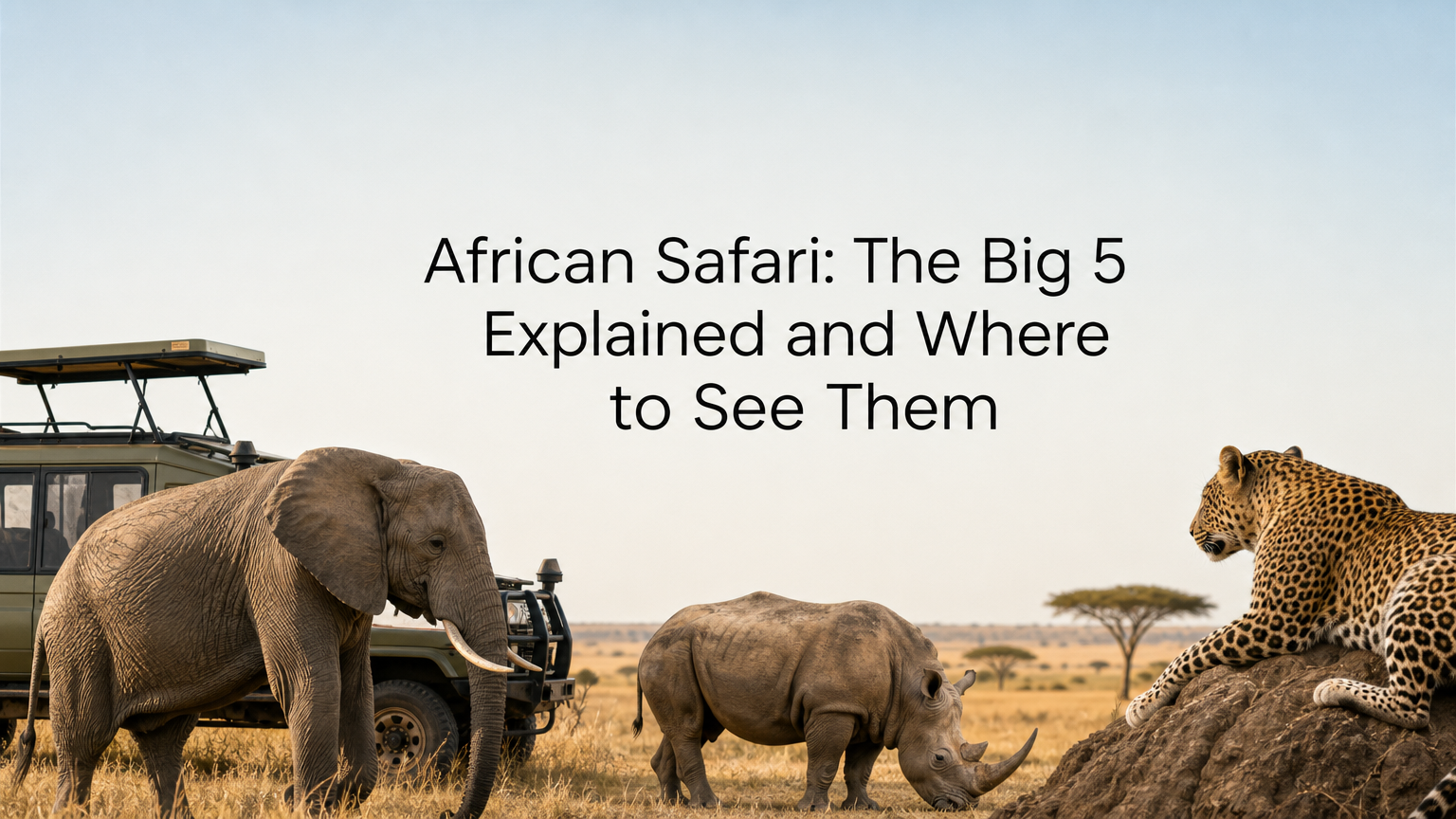
You keep seeing the phrase on safari brochures and wonder what it actually means. An African safari the Big 5 trip is built around five animals, and knowing who they are helps you choose the right park, the right season, and the right budget.
The Big 5 are the lion, leopard, African elephant, Cape buffalo, and rhino. The name comes from colonial-era hunters, who ranked these as the most dangerous animals to hunt on foot. Today the term is about photography and sightings, not trophies. You can see all five in Kenya, and Masai Mara National Reserve and Samburu are the strongest places to start. Rhinos are the hardest to find, so where you go matters.
At Extra Miles Unique Adventures, we have guided private safaris in Kenya and Tanzania since 2007. Below, we explain each animal, why it earned its spot, and which parks give you the best chance of a full set. You will also see how many days to plan and when to travel, so you can build a realistic itinerary before you request a quote.
Why the Big 5 matter on an African safari
Where the name came from
The label goes back to 19th-century hunters who ranked these five as the most dangerous animals to pursue on foot. Danger decided the list, not rarity or beauty. That is why cheetahs and giraffes never made it.
| Animal | Why hunters feared it |
|---|---|
| Lion | Hunts in groups and charges at close range |
| Leopard | Strikes from cover, even when wounded |
| African elephant | Huge size and a fast, determined charge |
| Cape buffalo | Unpredictable and fiercely protective of the herd |
| Rhino | Sudden charges despite poor eyesight |
Why it still shapes your itinerary
Today the list works as a shared goal for travelers. It gives first-timers a simple target and gives your guide a clear brief. Rhino and elephant populations also face poaching pressure, so the park fees you pay help fund rangers, sanctuaries, and community conservancies.
Seeing all five in one trip is realistic in Kenya, but only if your route includes a park with rhinos. Amboseli National Park, for example, is famous for elephants framed by Kilimanjaro, yet rhinos and leopards are scarce there.
Choose your parks by which of the five actually live there, not by the headline on a brochure.
That is the real value of the Big 5 for you. Treat it as a planning filter, not a trophy count. It tells you which parks to combine, how many days you need, and what to ask your operator before you pay a deposit.
How to see the Big 5 on your own safari
Time your trip and your drives
Start with the calendar. Dry months, June to October in Kenya, draw animals to rivers and thin the bush, so you spot more. Then plan around animal habits, because early morning and late afternoon drives are when lions, leopards, and buffalo move.
- Include at least one park with rhinos, such as Masai Mara or Lake Nakuru.
- Spend two nights or more in each park, so one quiet day does not sink your trip.
- Allow five days or more for a realistic shot at a full set.
Choose your guide and vehicle
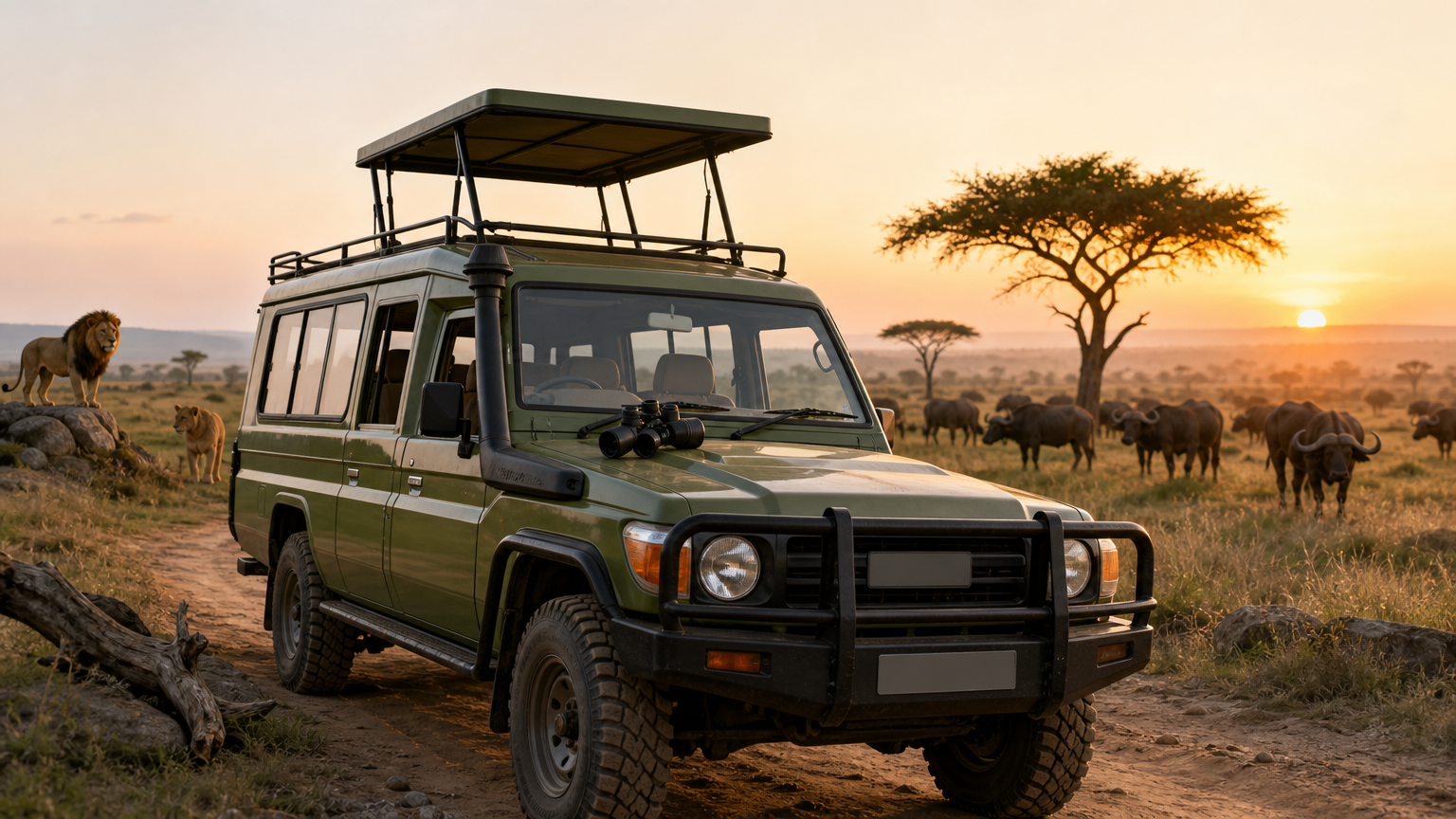
Next, pick your guide with care. On an African safari for the Big 5, a private vehicle with a pop-up roof lets you stay at a sighting as long as you like. A skilled local guide reads tracks, alarm calls, and radio tips from other drivers.
Time in the right park with the right guide beats a rushed route through more parks.
Finally, tell your operator which animal matters most to you. If it is a leopard, ask for extra hours along riverine trees, where cats rest in the shade.
Where to see all five in East Africa and beyond
Best parks for a full set
For an African safari the Big 5 checklist, Kenya and Tanzania give you the most reliable options. South Africa's Kruger is the main option beyond East Africa. Here is how the top parks compare.
| Park | Country | Big 5 notes |
|---|---|---|
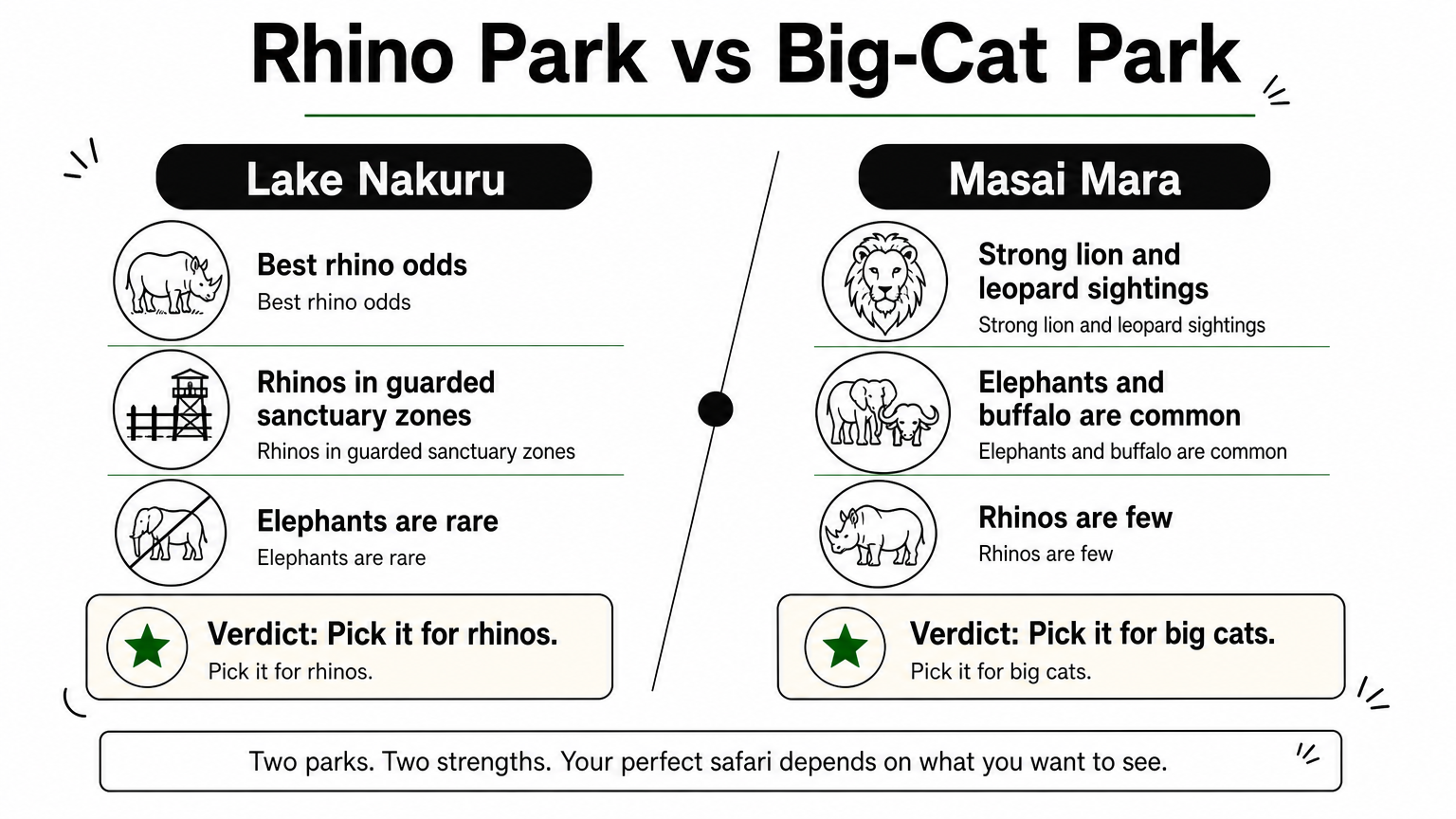
| Masai Mara | Kenya | All five, but rhinos are few |
| Lake Nakuru | Kenya | Best rhino odds, elephants rare |
| Serengeti | Tanzania | All five, rhinos scarce |
| Ngorongoro Crater | Tanzania | All five in one compact crater |
| Kruger | South Africa | All five, large rhino numbers |
Combining parks
Most travelers do best with two parks, not one. In Kenya, take a Masai Mara and Lake Nakuru safari to pair the two parks and cover the rhino gap. Samburu adds superb leopard and elephant sightings, but you should not count on rhinos there.
Tanzania works the same way. Ngorongoro Crater packs dense wildlife into a small floor, so a single crater day can produce several of the five.
No single park guarantees all five, so pair a rhino park with a big-cat park.
When you plan your route, ask your operator which park supplies each animal.
Which Big 5 animal is hardest to spot
Rhinos: the rarest sighting
Rhinos are the hardest of the five for most travelers. Black rhinos are critically endangered, so rangers keep them in guarded sanctuaries and protected zones. In Kenya, your best odds are Lake Nakuru, Masai Mara, and Ol Pejeta.
Expect distant views, often a gray shape resting in thick bush. Bring binoculars and ask your guide to check the known rhino areas first.
If rhinos matter to you, build them into the route first, because luck alone rarely delivers them.
Leopards: the master of hiding
Leopards come second on any African safari the Big 5 list. They are solitary and mostly nocturnal, and their spotted coats vanish in branches and grass. You can improve your odds, but you cannot promise a sighting.
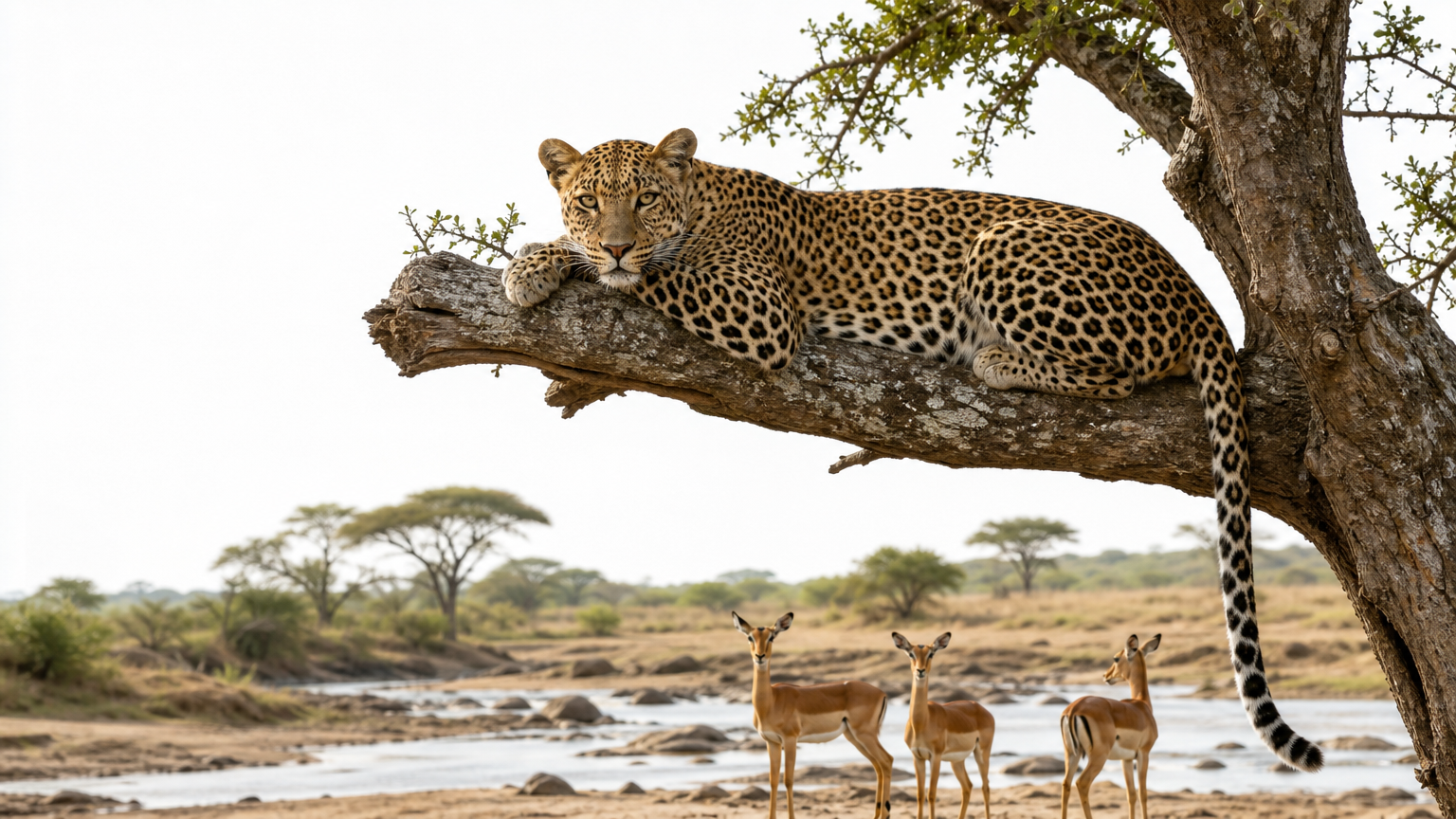
- Scan tree limbs along rivers, where cats rest in the shade.
- Drive at first light and last light.
- Listen for baboon and impala alarm calls, which often signal a cat nearby.
Beyond the Big 5: Little 5, Big 7 and other animals
The Little 5
Once you have checked off the main list, the Little 5 make a fun second game. Each one borrows part of its name from a Big 5 animal, and you can spot them on walks or at lodge waterholes.
| Little 5 | Big 5 match |
|---|---|
| Elephant shrew | Elephant |
| Leopard tortoise | Leopard |
| Ant lion | Lion |
| Rhinoceros beetle | Rhino |
| Buffalo weaver | Buffalo |
The Big 7 and other favorites
Next comes the Big 7, which adds the whale and the great white shark. It only works on South Africa's coast, so it does not fit an African safari the Big 5 route through Kenya.
Kenya offers plenty more to watch. Cheetahs, giraffes, hippos, and zebras appear on almost every drive, and the Great Migration crosses the Mara from July to October. Many guests remember a river crossing longer than any single Big 5 sighting.
The Big 5 is your starting point, so let the other animals shape your days too.
Planning your Big 5 safari
The lion, leopard, elephant, buffalo, and rhino started as a hunter's list and now work as a planning filter for choosing parks. Rhinos and leopards are the tough ones, so an African safari the Big 5 itinerary works best with two parks, five or more days, and a skilled guide.
Keep the rest simple. Travel in the dry months, drive at dawn and dusk, and let the Little 5, the Migration, and the other animals fill the gaps between big sightings. Your list is a starting point, not a score.
Ready to turn the list into a route? Request a custom quote on our 6-Day Kenya Big Five Express Safari from our Kenya team. We will match parks, dates, and budget to your pace, and a real person answers every question before you commit.